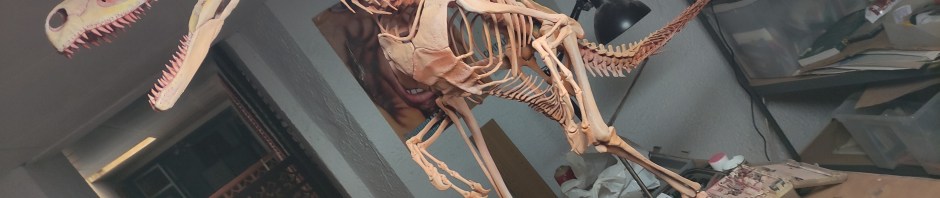
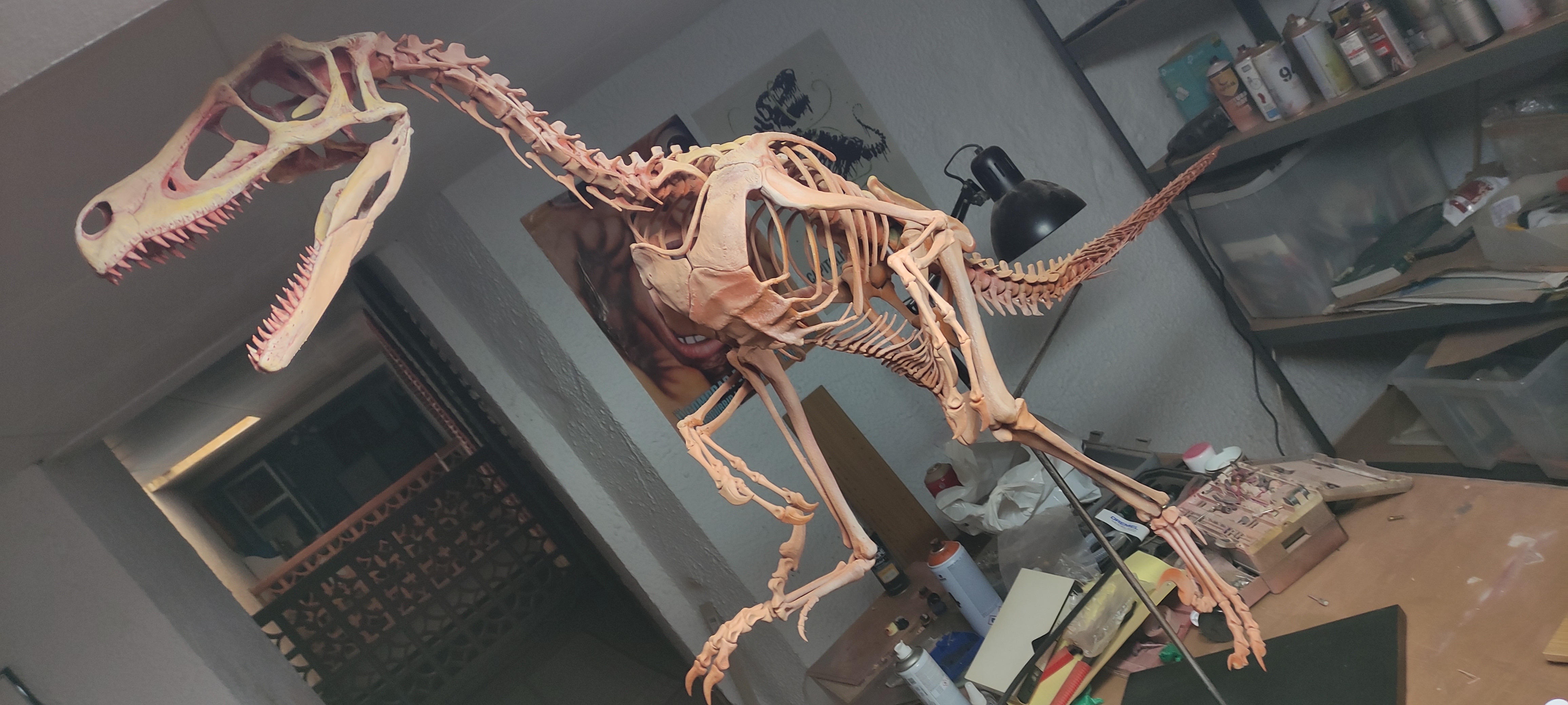
The process of learning is continuous and endless… and this one was too special to miss. It had been one of my greatest ambitions to built a complete life-size Velociraptor skeleton, bone by bone.
I jumped at the opportunity when I was offered a printed 3D skeleton. I thought it would be straightforward and it came recommended… little did I know that my problems would start even before beginning to build… I got >most< of the skeleton but, to my horror many bones were not there when I got it… and they were key bones… couldn’t build the skeleton with virtually missing most of the hands and feet, no tibias and an incomplete tail. That is indeed a lot of missing bones!
On top of everything: I was provided with NO instructions… just imagine trying to compare every single vertebrae by shape and guess a sequence without guidance . Building on such limited information seemed impossible! I finally found that what I have been offered was available somehow in the site “Cults” that has plenty of 3D files at very reasonable prices… at last I could start comparing with something tangible. Since I do not have any paper with full description of each of the Velociraptor vertebrae, at least I could start guessing by comparing them visually. Not the easiest of tasks! Having the pieces originally numbered would have been dead easy!
So, I started with what I had… that is obviously the skull, thoracic plates and part of the arms. Hands were incomplete but came soon enough.


Next was to try to find professional printers that would do the printing seriously and professionally… I’m not giving names (I might have been unlucky) but I found out that most of the approached didn’t dare and cancelled the order just when I thought they would do the job: the pieces were very light and fragile… the vertebral processes of the tail, both vertebrae and chevrons of the stiff part of the tail were as thin as needles in places… All this meant more waste of time,.
So what I thought would be a cheaper, straightforward process has taken months and much more effort than what I expected. Every time I managed to get a missing bit I ran and try to get it going… I had to cover and polish a lot of the printed bones with epoxy putty to fix some of the errors… the 3D printed material can be very brittle and flawed in the printing, especially if you are trying to use cheaper material.
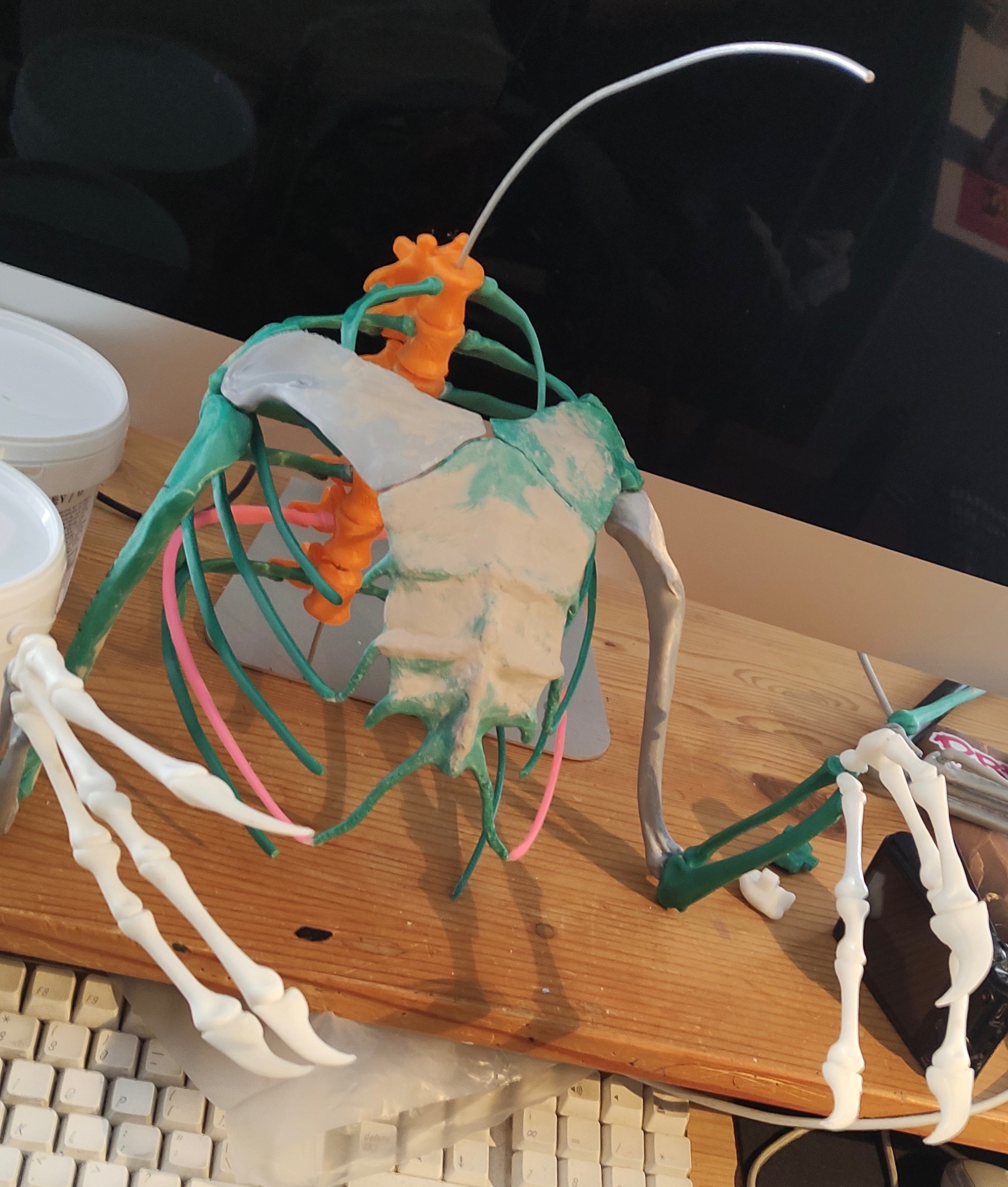
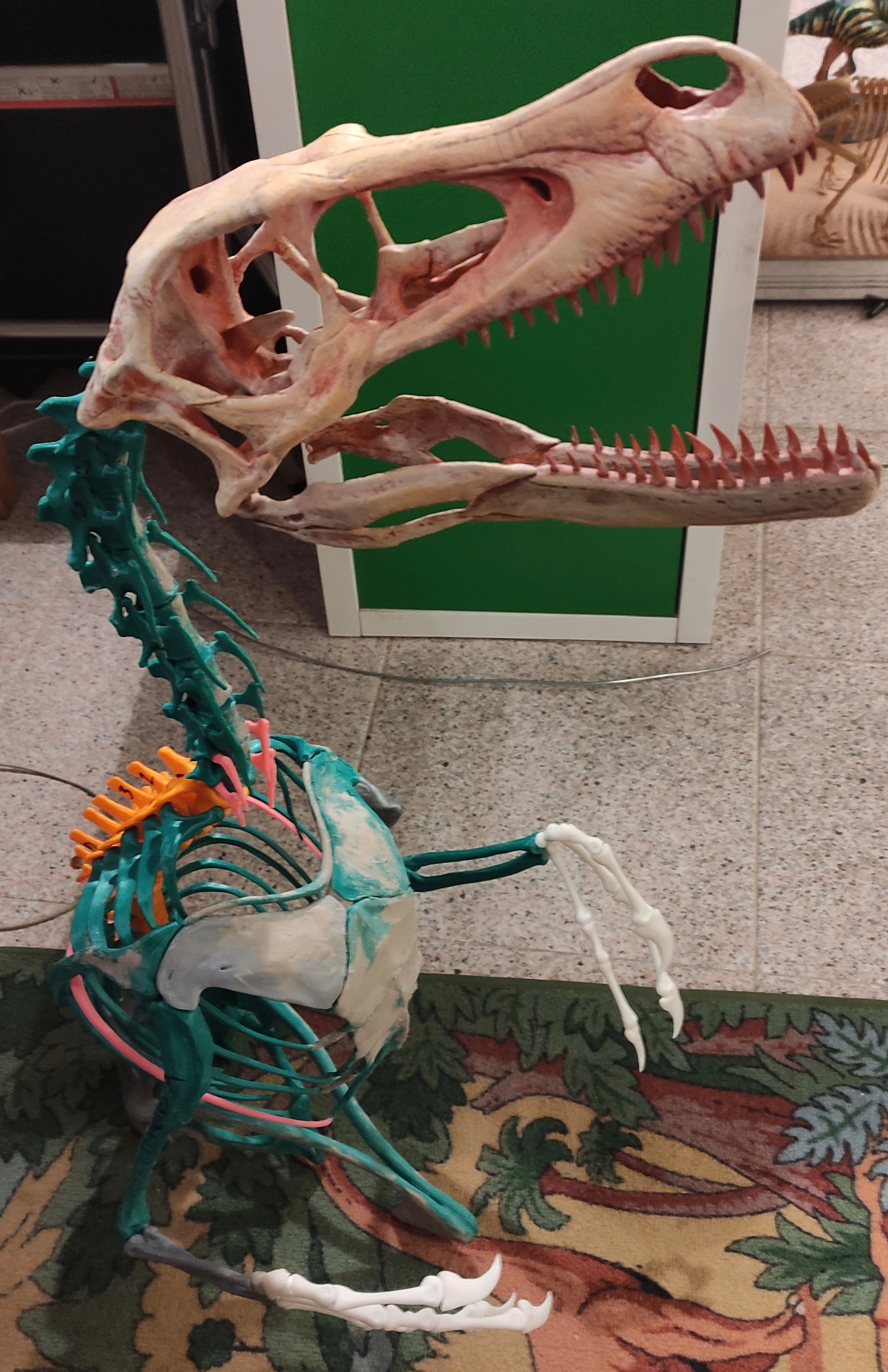

The last and more elaborate part (the end of the tail) had to be printed entirely in liquid white resin (the rest has been fibrous materials that are too brittle for those vertebrae)… that was the only way the processes had the strength to be bent without breaking them (although as you can imagine. many broke!). Fortunately I had a glue from England that is miraculously fast and resistant (and resistant)… I don’t know what I would do without Mitre Bond! Recommended!
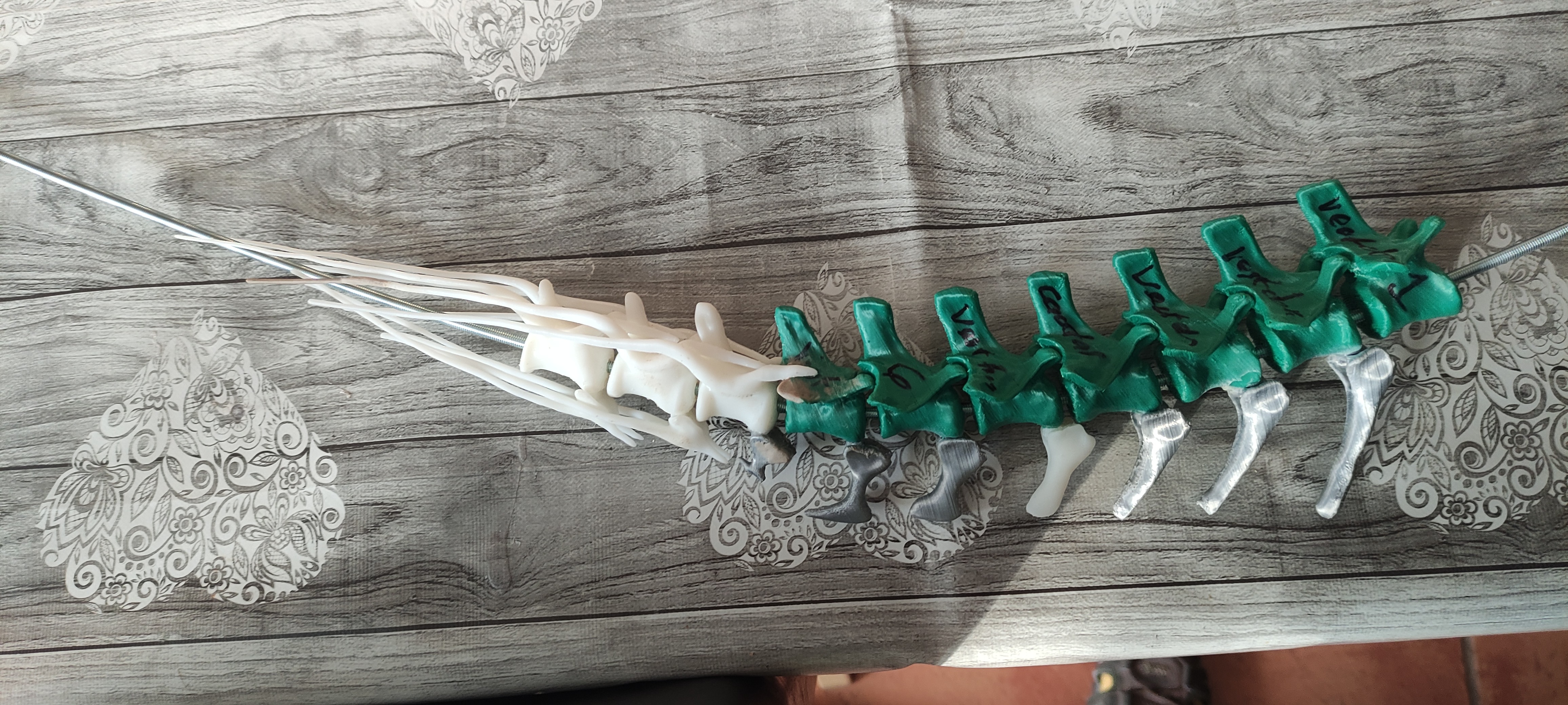

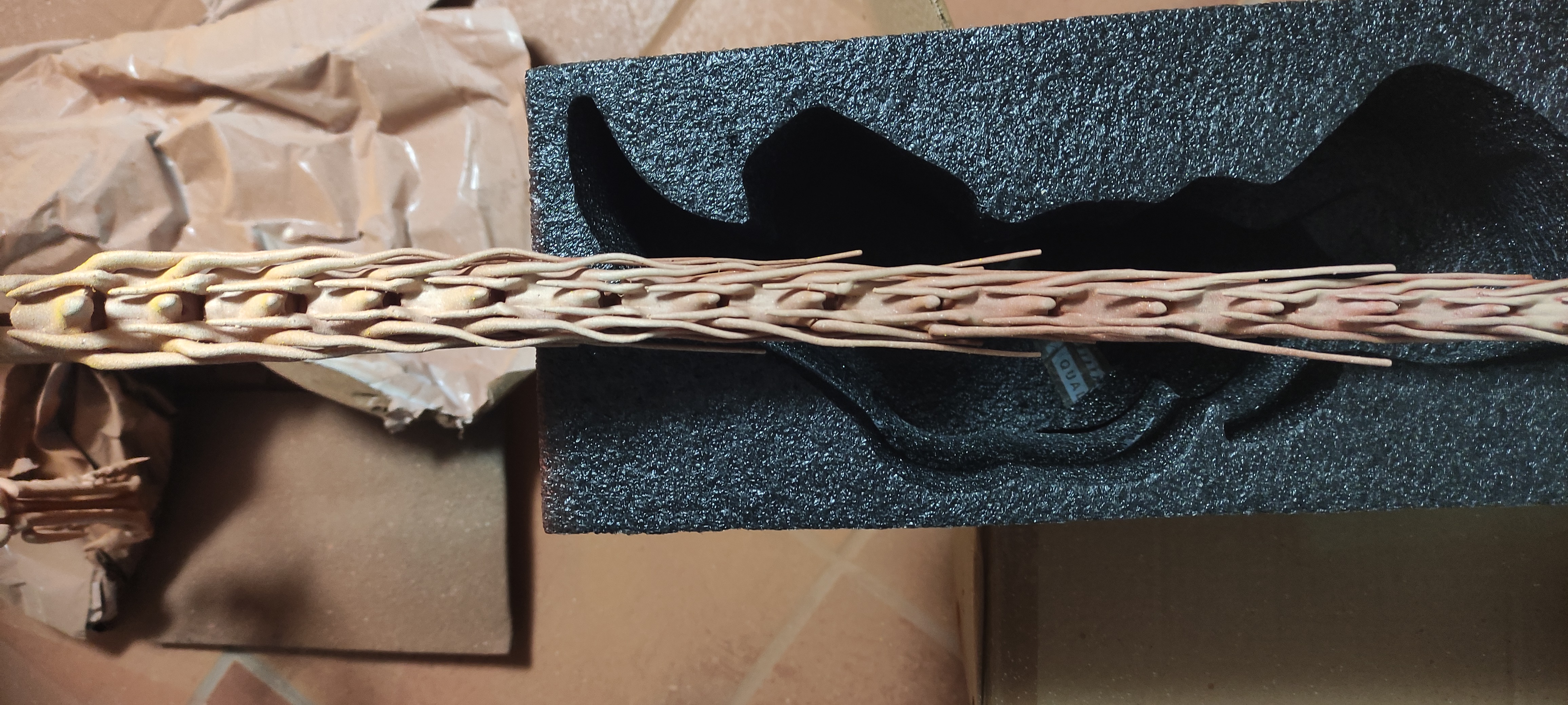
When I finally had the tail, getting into resin “macrame” was close to be an ordeal…I’was not even quite sure if some of the vertebrae were in the correct places… Sounds insane but, I had to “feel them” click and fight with the chevrons to fit afterwards, sometimes using a sharp knife to clean the pieces!… Weaving with resin strands is something else.
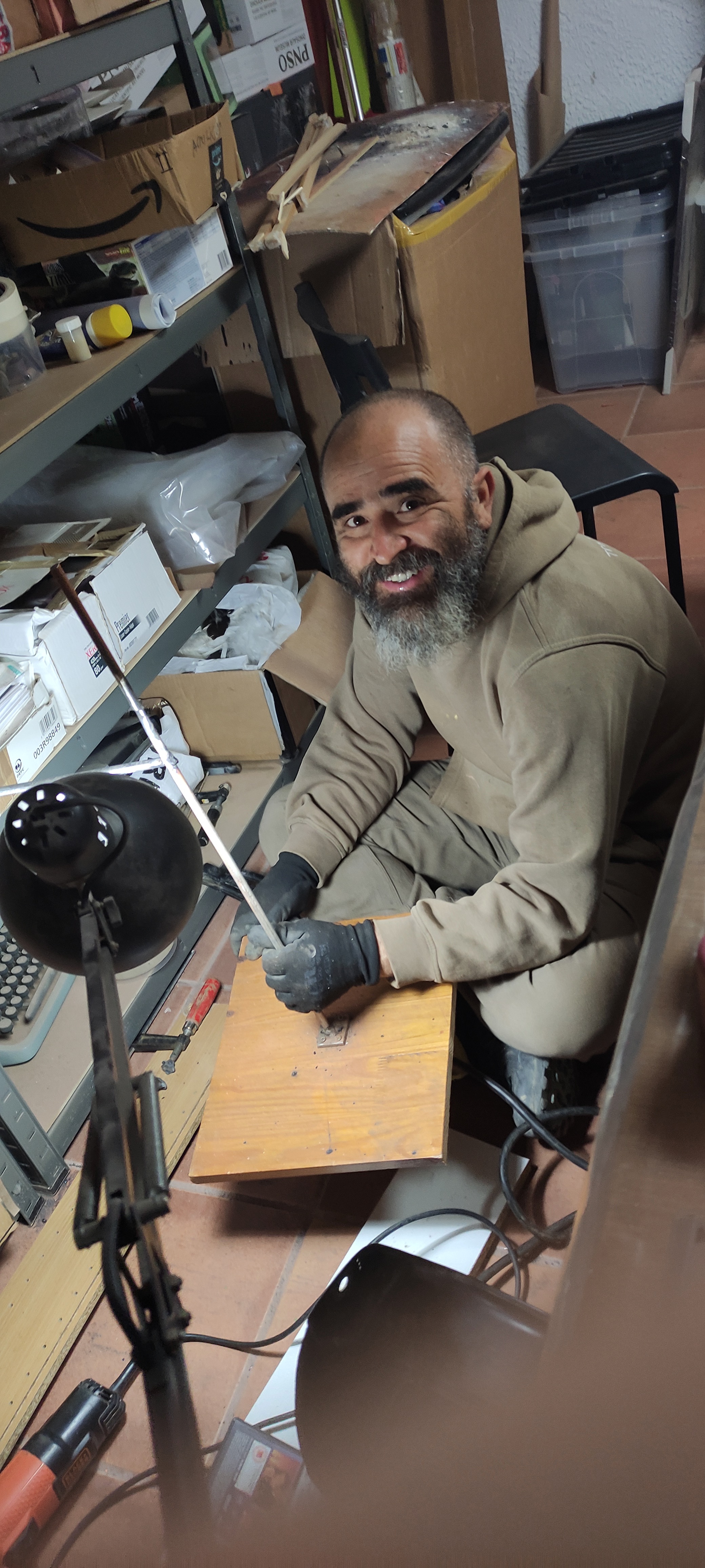
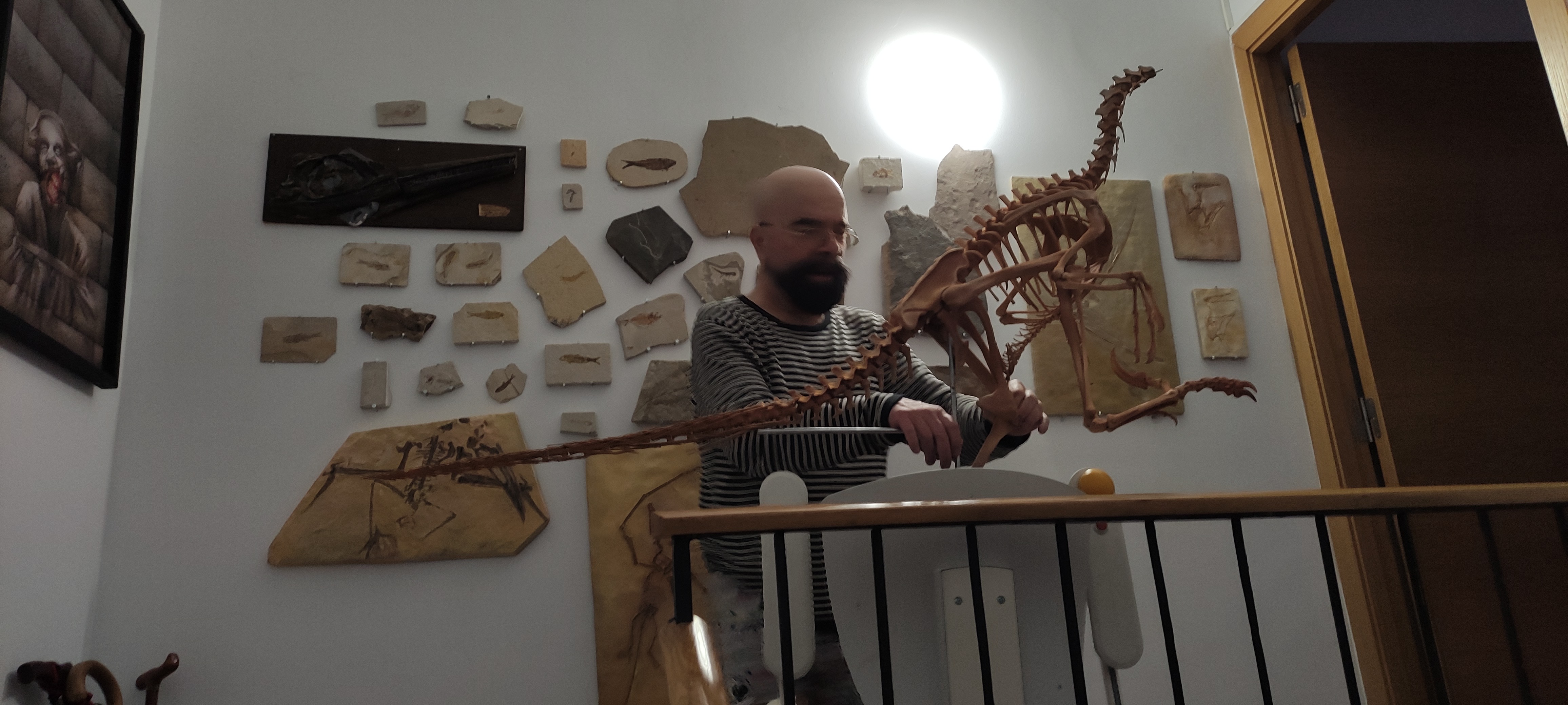
When I finished it, that was the last part to be inserted in the extremely fragile skeleton. To my horror, it was a bit too heavy for the rest of the skeleton and some bones started to crack.. High drama! … .I called my friend Juanvi to weld a base that could support the virtually floating skeleton with its tail without breaking! He did a splendid job.
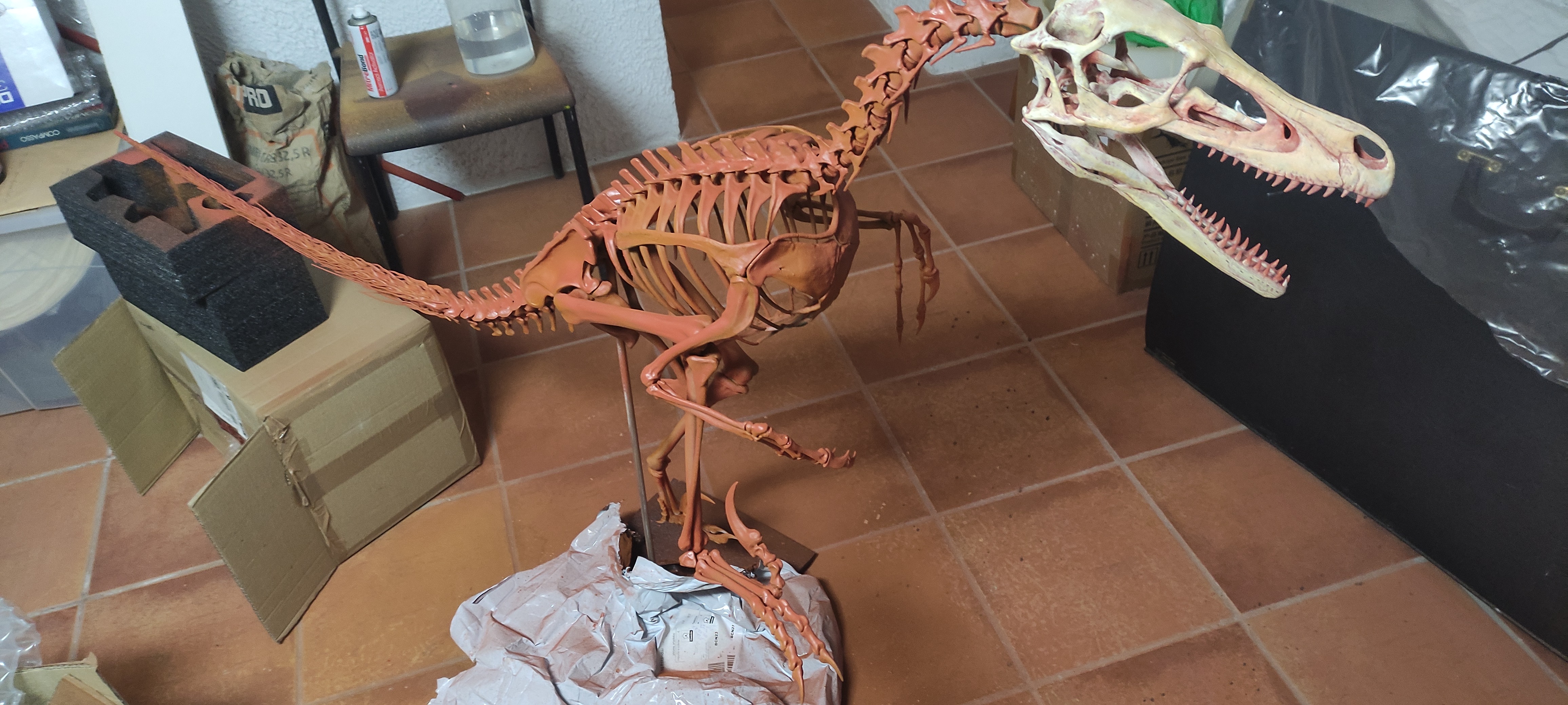
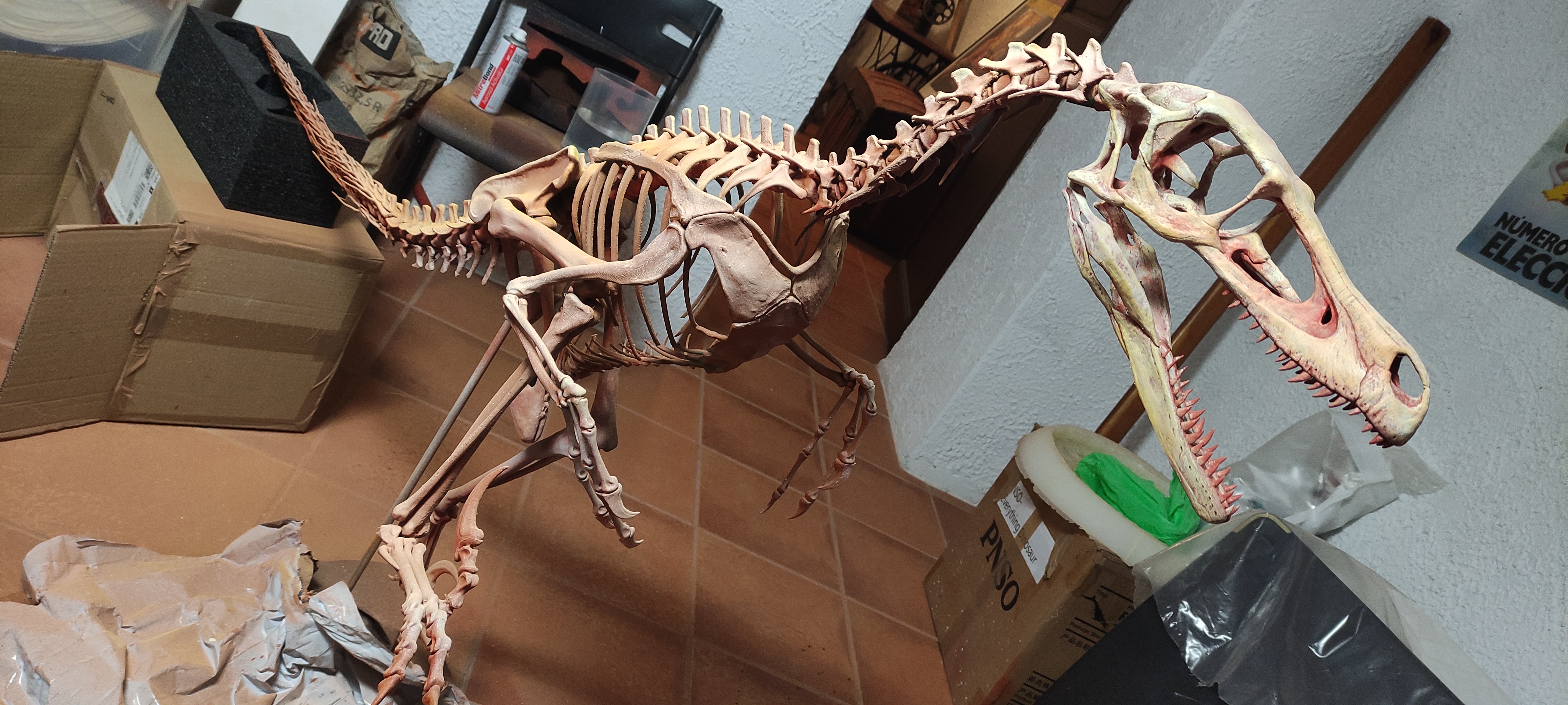
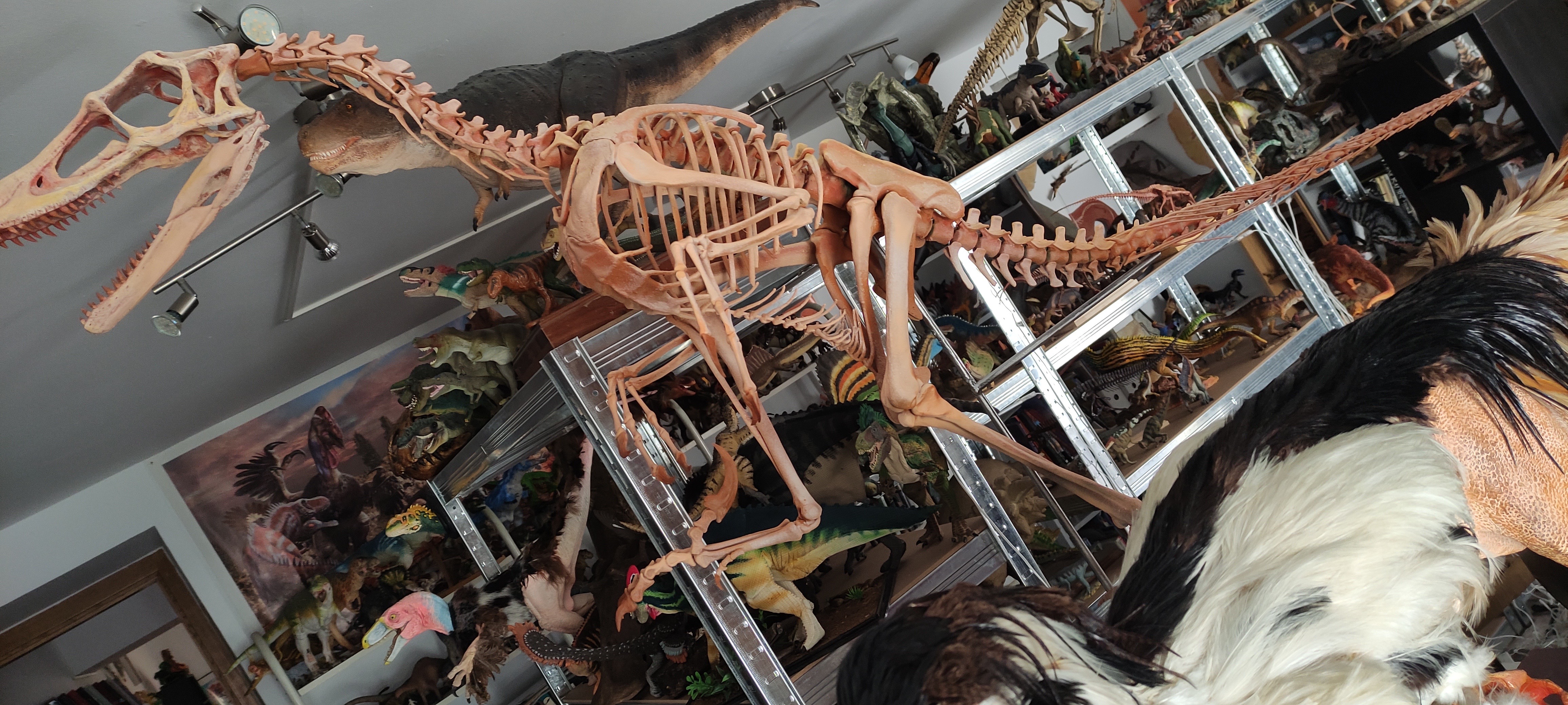
And suddenly there he was… a dream come true in plain Raptor attack mode!
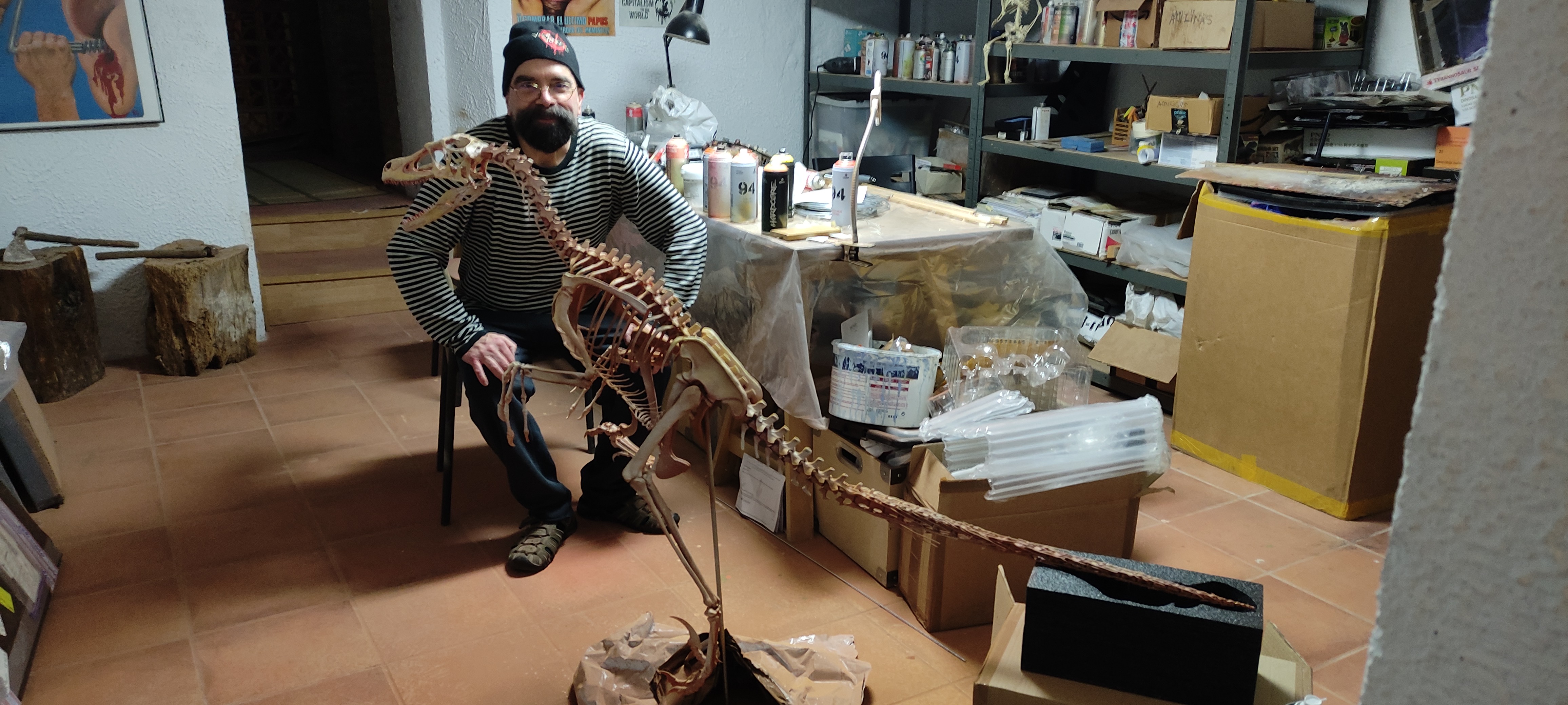
The painting process was furious and fast… such a release! I tried to convey the colours of the original Velociraptor fossils that are normally creamy white with a terracotta soil background. I reached a compromise, but that doesn’t mean it is quite finished yet!
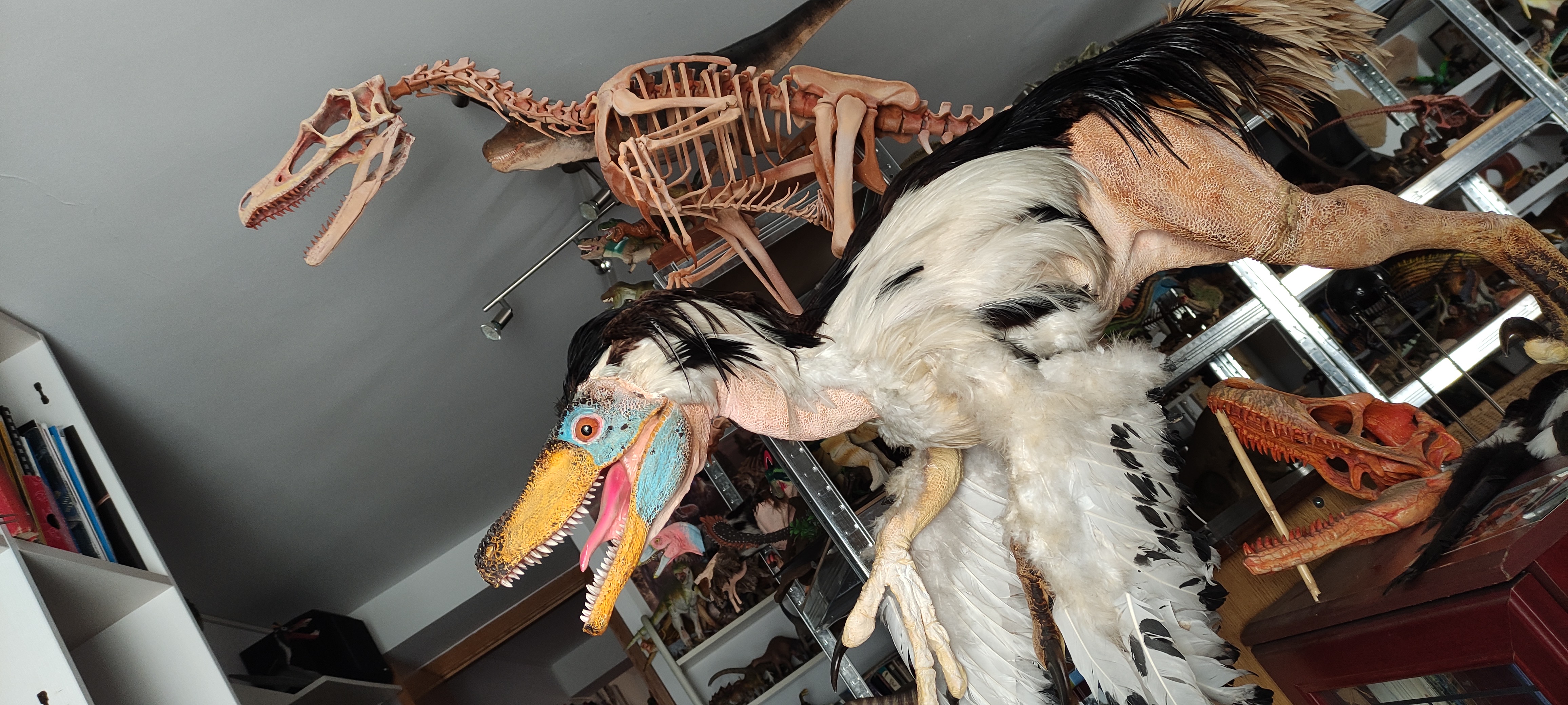
Here you can see the comparison between the mounted skeleton and the old McGrady/Rey fleshed out mode, that I always thought had the ideal proportions for a life-sized Velociraptor.. However, the skeleton is bigger than the model and the proportions are also quite dissimilar. Arms and tail are smaller, the skull is bigger and legs are longer. What it means to have more than 20 years of difference between them. I still find that the skeleton is much bigger than most Velociraptor fossils I know in any case… it may be a different species.. I also have a partial Gaston cast that shows definitively a smaller animal… I suppose we should give a critical appraisal of this skeleton and see what is the source … I suspect ithe proportions are taken from Scott Hartman’s new reconstructions…
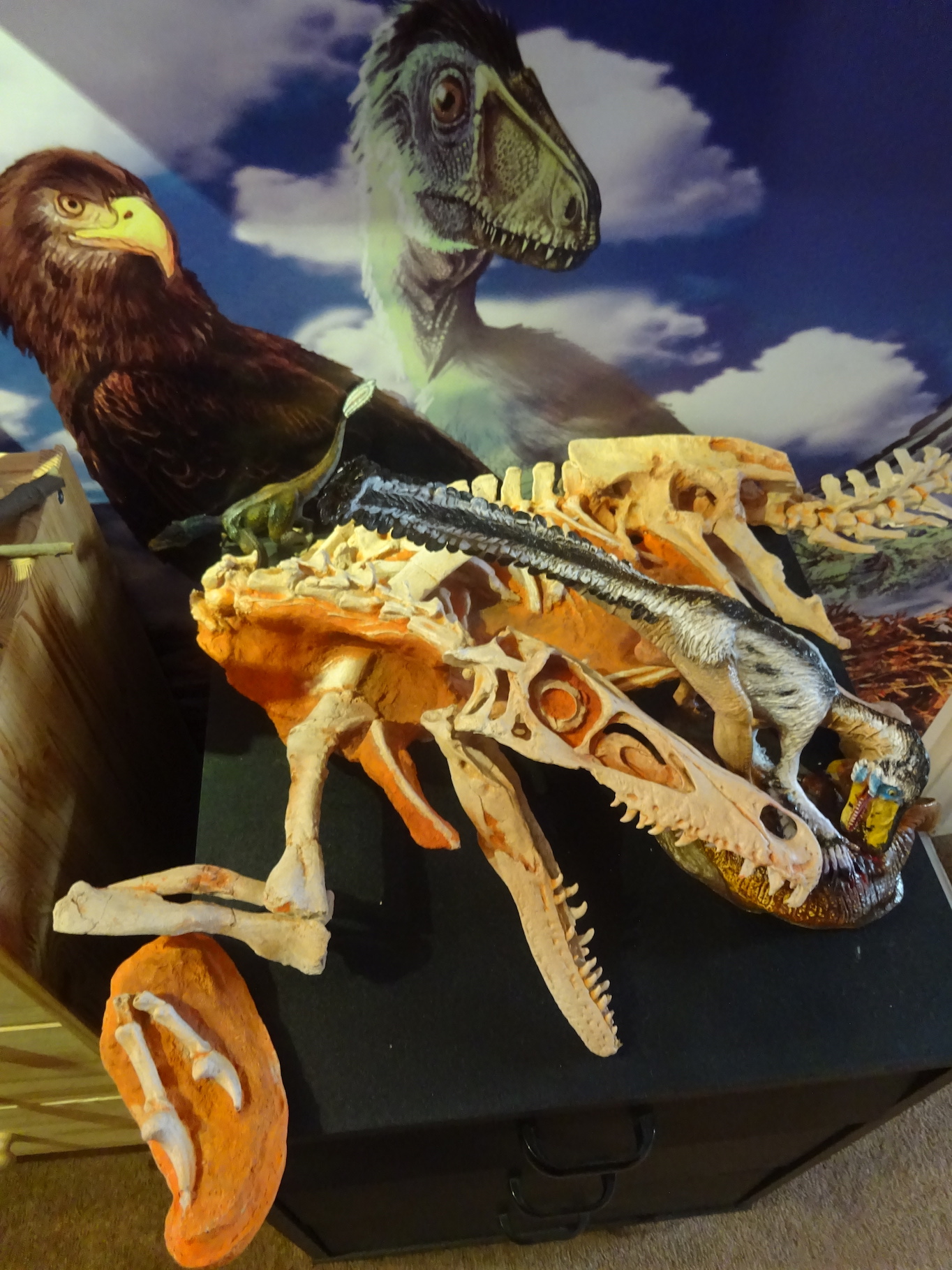
I still find the whole affair an extremely rewarding experience.


Interestingly, Sir, this animal was about the size of a *chicken*; so it really would not be a serious threat to an adult human, but might make for a “dinner” if we coexisted with them.
Oh, and plus: it is a real *manly* accomplishment you carried out; kudos and congratulations on that art project you did!
Reblogged this on Palpatine's Literary Library and commented:
Well-done; a truly *manly* accomplishment on your part!
Thank you… but it definitively was not the size of a chicken… smaller than a human of course, but more like a fairly big dog with a long tail… after all, it was two meters long! We can leave the chicken comparison for the smallest raptors and even Archaeopteryx. Sinosauropteryx was the size of a chicken with a long tail in the standard species.
Then our sources do not mesh; as what I have heard from paleontologists is that Velociraptor was the size of a chicken, or thereabouts; and the evidence I’d provide is the ability to get reliable food quantities and quality thereof… we are giants compared to earlier humans- the problems they had with good medicine and reliable quantities and quality of food we no longer have: we are provided with way more food growing up compared to them; and this increased our size, and general health.
The dinosaurs operated in a true “hunter-gatherer” level of food obtaining/agriculture: so they were not nearly as big as they could’ve been, nor as healthy as they could’ve been, had they had access to the kinds of nutrients we have obtained. There is also the detail of the size of the animal, in increasing, increases the amount of food it needs, and without cultivation you cannot produce nearly as much food per square mile- it maxes out. Birds, modern-day dinosaurs, are actually more efficient: smaller in size, and able to transit far longer distances to obtain food/forage.
The tail serves as a balancing orgain/appendage when traveling at speed, or leaping, and Oviraptor was about the size of a large turkey; that being the adult size of the smallest version. You’re probably thinking of Velociraptor’s larger relative species for the size, Dromeosaurs ranged in size significantly, but very few animals reach full size- so we have to be careful how big we calculate any animal’s size. And ironically that’s also why so many animals in captivity grow larger and live longer than their wild counterparts: more reliable food and medicine., especially when they’re growing up.
And I forgot something: namely that you’re welcome regarding the first part of your reply, most definitely sincerely welcome.